
Experimental hybrid training game in mixed reality designed for journalists and multimedia stories creators, 2021-2024
Hexatrope is an experimental hybrid training game in mixed reality designed for journalists, bloggers, producers, media and journalism students, and anyone who creates multimedia stories.
The project combines a tabletop board game, a structured card system, and a VR environment to simulate the workflow of a newsroom.
Players progress through seven stages of content production — from topic selection and information gathering to defining the format and promotion strategy. Throughout the process, the team makes strategic decisions, assigns roles, manages resources, and constructs a story from fragmented data collected in virtual reality.
The final outcome is not predetermined: the resulting media project emerges from the team’s chosen conclusions, economic decisions, and internal dynamics.
The game was developed for Silamedia and has been presented at ITMO University, Higher School of Economics, and Yandex conference Yet Another Conference / On Education, as well as at other venues, including international platforms.
The project combines a tabletop board game, a structured card system, and a VR environment to simulate the workflow of a newsroom.
Players progress through seven stages of content production — from topic selection and information gathering to defining the format and promotion strategy. Throughout the process, the team makes strategic decisions, assigns roles, manages resources, and constructs a story from fragmented data collected in virtual reality.
The final outcome is not predetermined: the resulting media project emerges from the team’s chosen conclusions, economic decisions, and internal dynamics.
The game was developed for Silamedia and has been presented at ITMO University, Higher School of Economics, and Yandex conference Yet Another Conference / On Education, as well as at other venues, including international platforms.
My Role on the Project
Hexatrope is an authorial project in which I served as creative lead, game designer, game system architect, narrative designer, and VR developer.
Together with the team, we developed the project’s content framework and visual identity.
Read more
Together with the team, we developed the project’s content framework and visual identity.
Read more
Three Core Elements of the Game
Hexatrope is a hybrid game system that integrates a physical game board, a structured card system, and a VR environment.
Each element serves a distinct function while operating in conjunction with the others, together forming a simulation of the editorial workflow.
Seven hexagonal tiles structure the stages of media project development.
The board defines progression, action logic, and key decision points.
The board defines progression, action logic, and key decision points.
The decks shape both the game economy and the narrative structure.
Players earn gexes, select formats and promotion strategies, and assemble the framework of the future story.
Players earn gexes, select formats and promotion strategies, and assemble the framework of the future story.
The virtual environment creates an asymmetric experience.
One player “in the field” gathers information, while the team analyzes and transforms it into a project decision.
One player “in the field” gathers information, while the team analyzes and transforms it into a project decision.

The Hexatrope game board consists of seven hexagonal tiles. Each tile represents a distinct stage in the creation of a multimedia project — from topic selection to cross-media publication.
The tiles perform a structural function: they define the sequence of actions, regulate pacing, and shape the architecture of the entire game system.
The tiles perform a structural function: they define the sequence of actions, regulate pacing, and shape the architecture of the entire game system.

Placed sequentially on the table, they form a visual map of multimedia production.
Each tile simultaneously functions as an instruction set, a navigation tool, a workload regulator, and a connective layer linking the board, the card system, and virtual reality into a unified gameplay logic.
Each tile simultaneously functions as an instruction set, a navigation tool, a workload regulator, and a connective layer linking the board, the card system, and virtual reality into a unified gameplay logic.
-
 InstructionEach tile contains specific actions and rules for its stage, defining the progression algorithm.
 -
 NavigationThe tile marks the current stage and guides the team through the sequence of editorial processes.
 -
 Workload RegulatorIcons and indices control the intensity of actions and the pacing of progression.
 -
 Connecting LayerThe tile integrates the game board, card system, and VR environment into a coherent systemic structure.

Two Layers:“In the Game” and “In Real Life”
Each Hexatrope tile is designed as a two-layer system.
The front side governs the gameplay process, while the reverse side раскрывает the professional context of what is happening.
The gameplay and methodological layers operate synchronously: action generates experience, commentary structures understanding.
This design transforms mechanics into a tool for reflection and connects the simulation to real-world media production practice.
The front side governs the gameplay process, while the reverse side раскрывает the professional context of what is happening.
The gameplay and methodological layers operate synchronously: action generates experience, commentary structures understanding.
This design transforms mechanics into a tool for reflection and connects the simulation to real-world media production practice.
-
 Action AlgorithmThe front side of each tile contains a step-by-step structure for the stage: icons with indices and instructions that define the sequence of team actions.
Rules are introduced progressively as players move from tile to tile.
This principle reduces cognitive load, simplifies the освоение of mechanics, and makes immersion into the system natural and accessible.
Players do not study the entire rule set in advance — they master it through action. -
 методический
комментарийThe reverse side of each tile contains a concise educational text explaining the professional context of the stage.
A QR code provides access to an extended theoretical module featuring texts, videos, and recommended reading.
Thus, the game not only simulates the process of media production but also provides tools for in-depth exploration of the subject.
Through its tile system, Hexatrope models the full media production cycle as a sequence of structured stages with constraints, resources, and decision points.
Through its tile system, Hexatrope models the full media production cycle as a sequence of structured stages defined by constraints, resources, and decision points.

The Hexatrope card system is the core of the project’s variability, economy, and educational logic.
It connects the tabletop gameplay, the VR experience, and the final development of the media project into a unified structure.
The cards are not auxiliary tools — they shape the architecture of the gameplay itself.
It connects the tabletop gameplay, the VR experience, and the final development of the media project into a unified structure.
The cards are not auxiliary tools — they shape the architecture of the gameplay itself.
The system consists of several decks, each performing a distinct function:
- Brain — tasks focused on knowledge and professional competencies.
- Heart — tasks developing team dynamics and soft skills.
- Conclusions — documentation of analytical decisions made after VR episodes.
- Formats — selection of the structural framework for the future media piece.
- Promotion — modeling media strategy and distribution.
The Brain and Heart decks allow players to earn hexes — the in-game currency.
Hexes are then used to purchase Formats and Promotion cards.
Thus:
Hexes are then used to purchase Formats and Promotion cards.
Thus:
- cognitive effort is converted into strategic opportunities;
- educational tasks directly influence the final outcome;
- the team continuously balances analysis, production, and distribution.
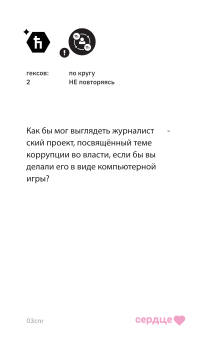
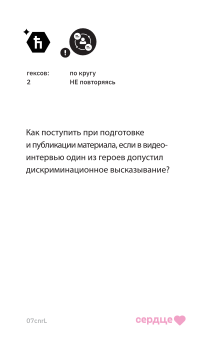
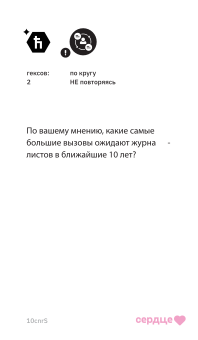
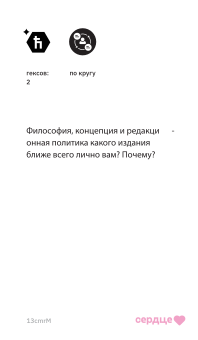
Heart
Number of cards: 78
*Source of in-game currency
These cards focus on soft skill development and strengthening team dynamics. Tasks are completed collectively and often require discussion, such as debates, ethical dilemmas, empathy, and group cohesion exercises.
*Source of in-game currency
These cards focus on soft skill development and strengthening team dynamics. Tasks are completed collectively and often require discussion, such as debates, ethical dilemmas, empathy, and group cohesion exercises.
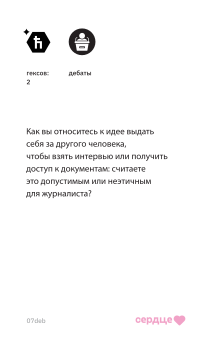
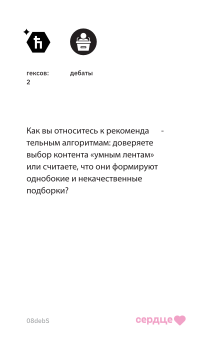

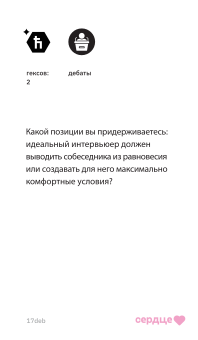
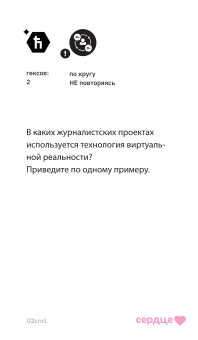
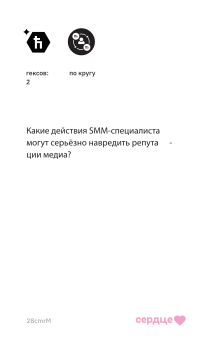
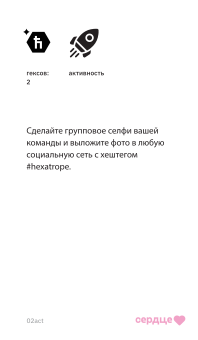
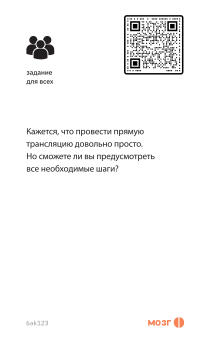
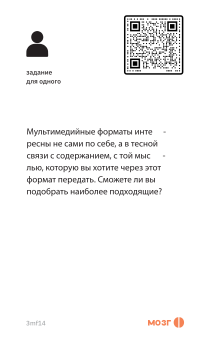
Brain
Number of cards: 78
*Source of in-game currency
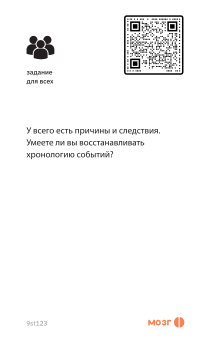
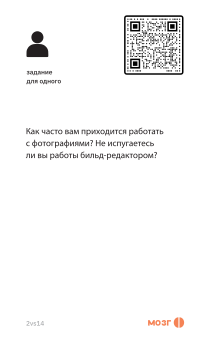
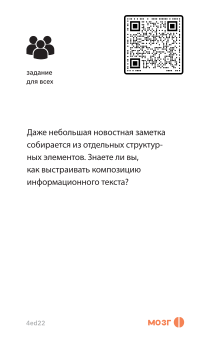
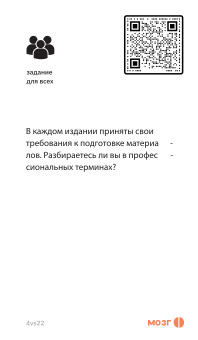
This deck contains analytical tasks such as tests, data matching, and fact-checking. Each card includes a QR code linking to a mobile interaction, tying tabletop play to digital content.
ПРИМЕРЫ КАРТ:
*Source of in-game currency
This deck contains analytical tasks such as tests, data matching, and fact-checking. Each card includes a QR code linking to a mobile interaction, tying tabletop play to digital content.
ПРИМЕРЫ КАРТ:
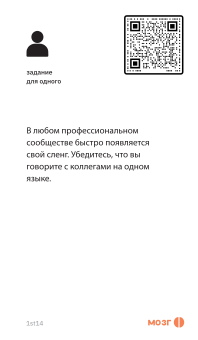
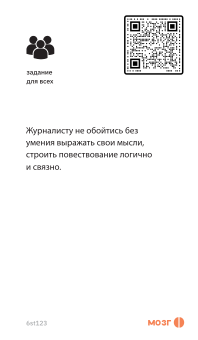

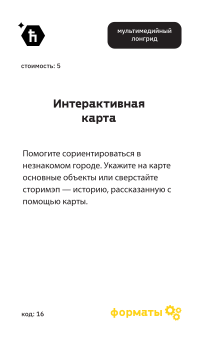
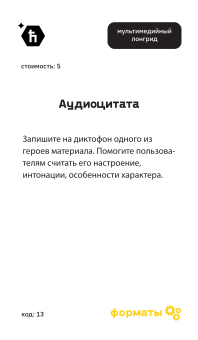
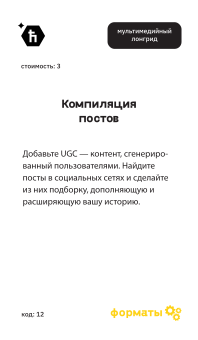
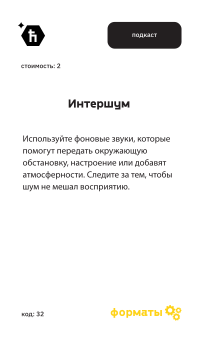
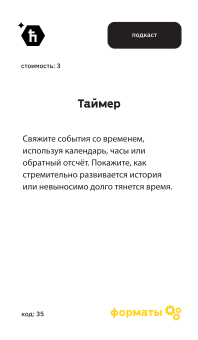
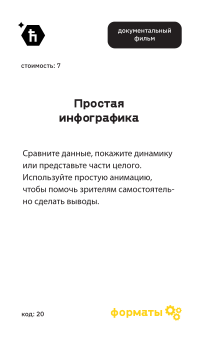
Formats
Number of cards: 78 (divided into 4 types)
*Purchased with hexes
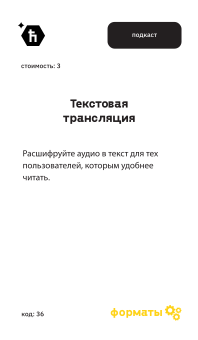
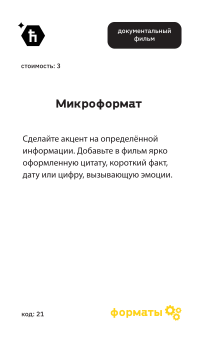
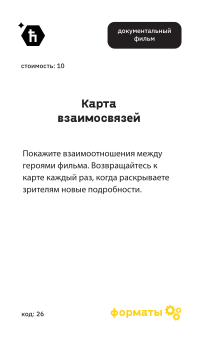
This deck determines the form of the future media product. Players choose and purchase specific format tools, such as multimedia longreads, newspaper articles, podcasts, or documentary films.
ПРИМЕРЫ КАРТ:
*Purchased with hexes
This deck determines the form of the future media product. Players choose and purchase specific format tools, such as multimedia longreads, newspaper articles, podcasts, or documentary films.
ПРИМЕРЫ КАРТ:
Promotion
Number of cards: 78 (разделены на 8 категорий)
*Purchased with hexes
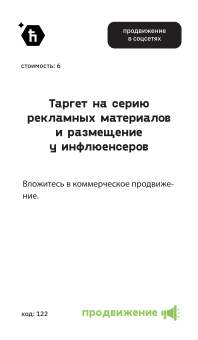
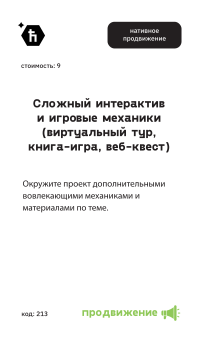
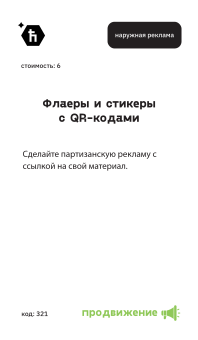
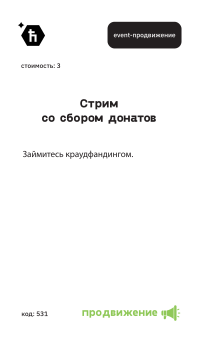
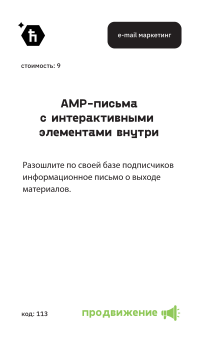
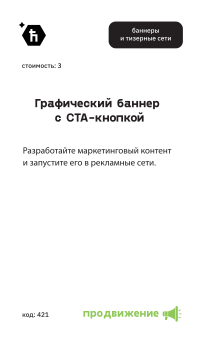
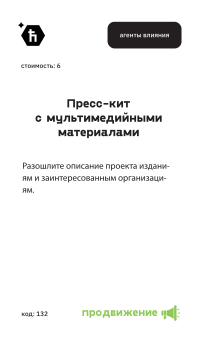
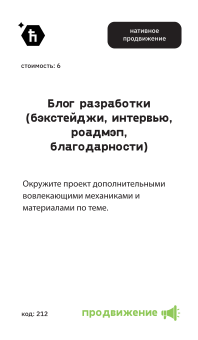
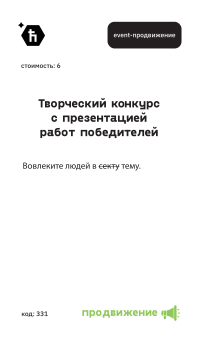
This deck models the process of distributing the media product. Categories include native promotion, SEO, banner and teaser networks, email marketing, social media campaigns, influencer engagement, outdoor advertising, and event promotion.
ПРИМЕРЫ КАРТ:
*Purchased with hexes
This deck models the process of distributing the media product. Categories include native promotion, SEO, banner and teaser networks, email marketing, social media campaigns, influencer engagement, outdoor advertising, and event promotion.
ПРИМЕРЫ КАРТ:
ВЫВОДЫ
Number of cards: 78 (divided into 8 categories)
*Constructive element of the final material
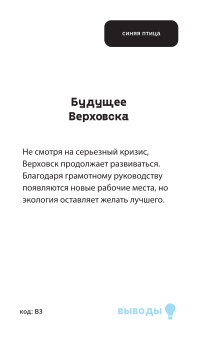
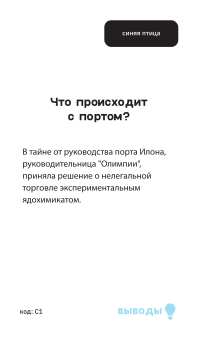
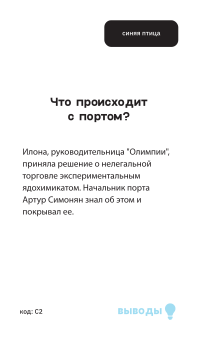
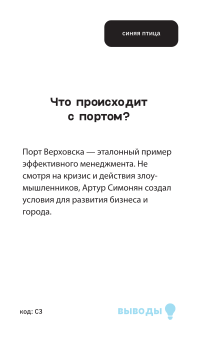
These cards record the analytical decisions players make after VR segments. They reflect the team’s interpretation of facts and form the basis of the narrative and final project structure.
ПРИМЕРЫ КАРТ:
*Constructive element of the final material
These cards record the analytical decisions players make after VR segments. They reflect the team’s interpretation of facts and form the basis of the narrative and final project structure.
ПРИМЕРЫ КАРТ:




VR in Hexatrope functions as the practical layer of experience. While the tabletop game models editorial planning, the VR environment simulates on-the-ground reporting.
The system is built on three principles:
Out of the seven stages in Hexatrope, players enter VR at three key levels:
The system is built on three principles:
- Incomplete information as a foundational condition.
- Responsibility for interpretation.
- Transfer of individual experience into collective decision-making.
Out of the seven stages in Hexatrope, players enter VR at three key levels:
1
Topic Selection
At this stage, the player chooses the narrative episode (novella) that the team will experience.
This choice determines the type of tasks, the mode of interaction, and the specific mechanics involved.
This choice determines the type of tasks, the mode of interaction, and the specific mechanics involved.
2
Information Gathering
This is the core gameplay layer.
The player explores environments, conducts dialogues, makes decisions, and collects facts.
Facts are the key resource. They may be accurate, partially true, or false. The set of collected facts directly influences the next stage.
The player explores environments, conducts dialogues, makes decisions, and collects facts.
Facts are the key resource. They may be accurate, partially true, or false. The set of collected facts directly influences the next stage.
3
Data Analysis
The final VR level is analytical.
The player works with dedicated question stands.
Each stand presents a central question, the collected facts, and a set of possible answers (i.e., conclusions).
The player’s task is to distinguish reliable information from false data, correlate the collected facts with the questions, and select the most appropriate answers.
These selected answers are transferred to the tabletop phase of the game as Conclusions cards and form the structural foundation of the final media project.
The player works with dedicated question stands.
Each stand presents a central question, the collected facts, and a set of possible answers (i.e., conclusions).
The player’s task is to distinguish reliable information from false data, correlate the collected facts with the questions, and select the most appropriate answers.
These selected answers are transferred to the tabletop phase of the game as Conclusions cards and form the structural foundation of the final media project.
Game Novels (Narrative Modes)
-
 Investigative JournalismThe player arrives in a town and interacts with residents, exploring locations to uncover hidden truths.
 -
 Press ConferenceThe player prepares for and participates in a press event, formulating questions and reacting to answers in real time.
 -
 Portrait InterviewThe player studies a subject’s biography and environment, then conducts an in-depth interview.
 -
 Discrimination in ProfessionThe player replays the same scenario from multiple social perspectives — elderly male journalist, young woman, member of an ethnic minority, and a journalist in a wheelchair.
Reactions and access to information vary based on role.
VR Core Gameplay